Summarize this blog post with:
Quick Summary
EdTech companies can boost growth by using personalized messaging, valuable content, omnichannel campaigns, AI-driven personalizations, data insights, social engagement, and strategic partnerships to connect with learners and build strong customer relationships.
The Ed-Tech industry is booming faster than ever, and 2027 guarantees even greater opportunities for businesses to expand successfully. Ed-Tech professionals need actionable marketing approaches that not only build brand visibility but also get engagement and measurable results in a crowded marketplace.
With the speedy advancements in digital tools, it's important to adopt strategies that resonate with current tech-savvy audiences. Effective marketing for edutech companies isn't just about promoting a product. It's about creating real value and establishing your brand as a trusted voice in education.
Therefore, this blog covers 7 innovative Ed-Tech marketing strategies to help any Ed-Tech professional manage their business perfectly.
Let's get started!
What Is Ed-Tech Marketing?
EdTech marketing is the promotion of technology-based tools and solutions that improve education. It connects schools, teachers, and students with modern learning methods. The goal is simple: make education accessible, engaging, and effective wherever a learner happens to be.
EdTech marketing has changed alongside digital platforms, blending innovation, technology, and data-driven insight. A strong EdTech marketing strategy for an edutech approach treats every message as a chance to build trust, not just drive a signup.
Here's why EdTech marketing matters:
- Wider accessibility: Digital reach lets educational institutions connect with students anywhere in the world.
- Higher engagement: Interactive content keeps students and parents involved instead of passive.
- Faster innovation: Strong marketing lets EdTech products compete and grow in a crowded category.
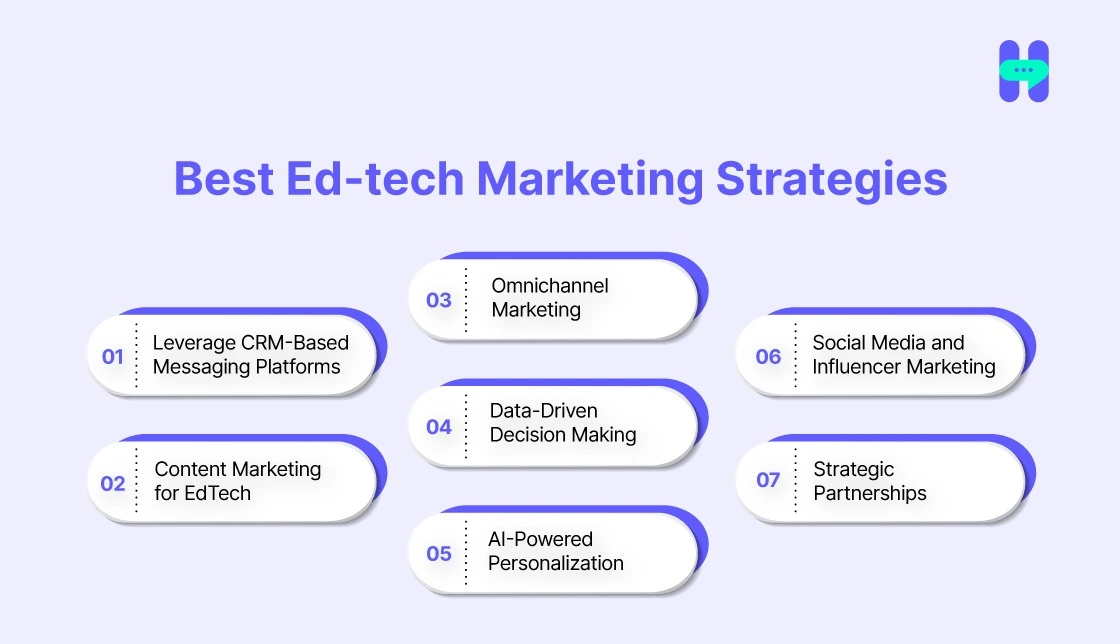
7 Smart Ed-tech Marketing Strategies
1. Choose The Right EdTech Marketing Platform
An EdTech marketing platform built on CRM data simplifies communication by automating SMS and WhatsApp messaging. It lets EdTech businesses reach students, parents, and educators without manual follow-up for every message.
Personalized, timely communication builds trust with your audience. Automation frees your team from repetitive daily tasks so they can focus on scaling the business and delivering value to customers.
Tools like HelloSend handle this work directly inside your CRM. You can explore the platform by booking a demo or signing up directly.

2. Build Your EdTech Product Marketing Strategy Around Content
Storytelling carries real weight in EdTech, and content marketing remains one of the strongest ways to capture attention in 2027. Publishing value-driven content builds credibility, educates prospective customers, and positions your brand as a trusted resource.
A focused edtech product marketing strategy connects specific product features to real classroom problems instead of generic promises. Applying that strategy to niche topics, like marketing in the education sector, helps you speak directly to the audience segment you're targeting.
Why content marketing matters for EdTech:
- Builds authority: Whitepapers and blogs position your company as a category leader.
- Captures attention: Infographics and video turn complex education topics into something easy to follow.
- Generates leads: Case studies and success stories give prospective buyers a reason to act.
- Improves SEO: Consistent, keyword-relevant content raises your search rankings over time.
3. Run Omnichannel Campaigns
Omnichannel marketing is crucial for EdTech marketing since it ensures smooth communication across several platforms. This strategy allows for constant and successful communication with an audience that covers a variety of age groups and preferences.
It's a tactic intended to optimize impact at every touchpoint and convey consistent messaging.
The Benefits of Omnichannel Marketing for EdTech
- Customized Interaction: Use data-driven insights from email, WhatsApp, and SMS marketing to customize campaigns for students, novices, and recent grads.
- Expanded Scope: Use a variety of outlets to reach a wider audience and ensure that potential leads are not overlooked.
- Uniformity Throughout Channels: Deliver a consistent message through WhatsApp and SMS campaigns or EdTech digital marketing methods.
How to Implement Omnichannel Marketing?
- Begin by integrating CRM: Use solutions that streamline outreach and tracking by combining communications across platforms.
- Create Campaigns That Are Targeted: Use WhatsApp for interactive help, emails for in-depth correspondence, and SMS for offers with a deadline.
- Monitor and Enhance: Utilize analytics to determine which messaging and platforms work best for marketing initiatives in the education sector.
4. Make Data-Driven Decisions
Data-driven decision-making is essential in today's intense EdTech market. By examining consumer habits, choices, and engagement rates, businesses may improve the results of their EdTech marketing strategies.
The Significance of Data in EdTech
- Tailored Marketing Strategies: Knowing consumer demands enables you to create compelling, customized marketing communications.
- Optimized Resource Allocation: Information determines which marketing platforms, such as social media, SMS, or email, provide the best return on investment.
- Improved Targeting: Advanced analytics enable segmentation based on goals, learning styles, and demographics, ensuring that campaigns are pertinent to each target segment.
Making Use of Analytics Tools:
CRM and Google Analytics are two platforms that offer priceless insights.
For instance:
- Determine user journey drop-off locations to resolve any possible obstacles.
- Evaluate the success of campaigns using WhatsApp, SMS, and email in real time.
- To foresee trends and make appropriate plans, use predictive analytics.
5. Use AI-Powered Personalization
EdTech marketing strategies are being revolutionized by AI-powered customization in an era where students want customized experiences. AI is more than data analysis; it transforms insights into workable solutions and builds personalized learning paths that captivate students like never before.
AI integrates with CRM-based messaging apps like WhatsApp and SMS to provide students with timely, tailored updates. When paired with instructional marketing techniques, this strategy guarantees increased engagement and satisfaction.
The Significance of AI in EdTech
- Increased Involvement: By recognizing personal preferences, AI ensures that students are exposed to content that suits their preferred learning method.
- Dynamic Suggestions: Using historical behavior and objectives, algorithms recommend tools, resources, or courses.
- Scalable Personalization: AI ensures that every encounter feels unique, regardless of how many students you're trying to reach—10 or ten thousand.
EdTech businesses may raise the bar for learner satisfaction with AI-driven customization. AI is revolutionizing EdTech industry marketing solutions by improving user experience and retention in the educational sector.
6. Invest In Social Media And Influencer Marketing
Social media networks like YouTube, Instagram, and TikTok have developed into EdTech marketing's ultimate playgrounds. Through compelling content that resonates, they provide dynamic possibilities to connect with various groups, including parents and students.
Why Is Social Media Important?
- Wide Audience Reach: With billions of users, platforms like Instagram and TikTok are perfect for reaching the proper audience.
- Visual Appeal: EdTech companies may transform difficult concepts into easily understood visual representations using stories, reels, and videos.
- Real-Time Engagement: Features like Instagram Q&A sessions or live YouTube videos encourage face-to-face communication, which increases legitimacy and confidence.
Role of Influencers in EdTech Marketing
Your brand's reach can be increased by working with influencers focusing on the education industry.
For instance, micro-influencers with specialized fan bases can add relatability and authenticity to your ed-tech marketing approach.
Influencers may evaluate your platform, provide tutorials highlighting its features, or share their learning experiences.
7. Build Strategic Partnerships With An EdTech Brand Strategy Company
Solid partnerships remain a core part of EdTech marketing success. Working with corporations, colleges, and schools extends your reach and strengthens your reputation. Partnering with an edtech brand strategy company can help you turn scattered marketing efforts into one coordinated plan.
Why strategic alliances matter:
- Direct audience access: Schools and colleges already have relationships with your primary audience of parents, teachers, and students.
- Mutual growth: Partnerships create reciprocal marketing that raises visibility for everyone involved.
- Stronger credibility: Association with respected institutions builds trust in your platform.
How to build effective partnerships:
- Work with educational institutions. Offer campus-wide SMS communication systems or digital learning resources that benefit faculty and students right away.
- Partner with companies. Team up with businesses looking to modernize employee training.
- Support government and nonprofit programs. Align with initiatives focused on skill development or digital education access.
How HelloSend Helps Ed-Tech Businesses To Expand?
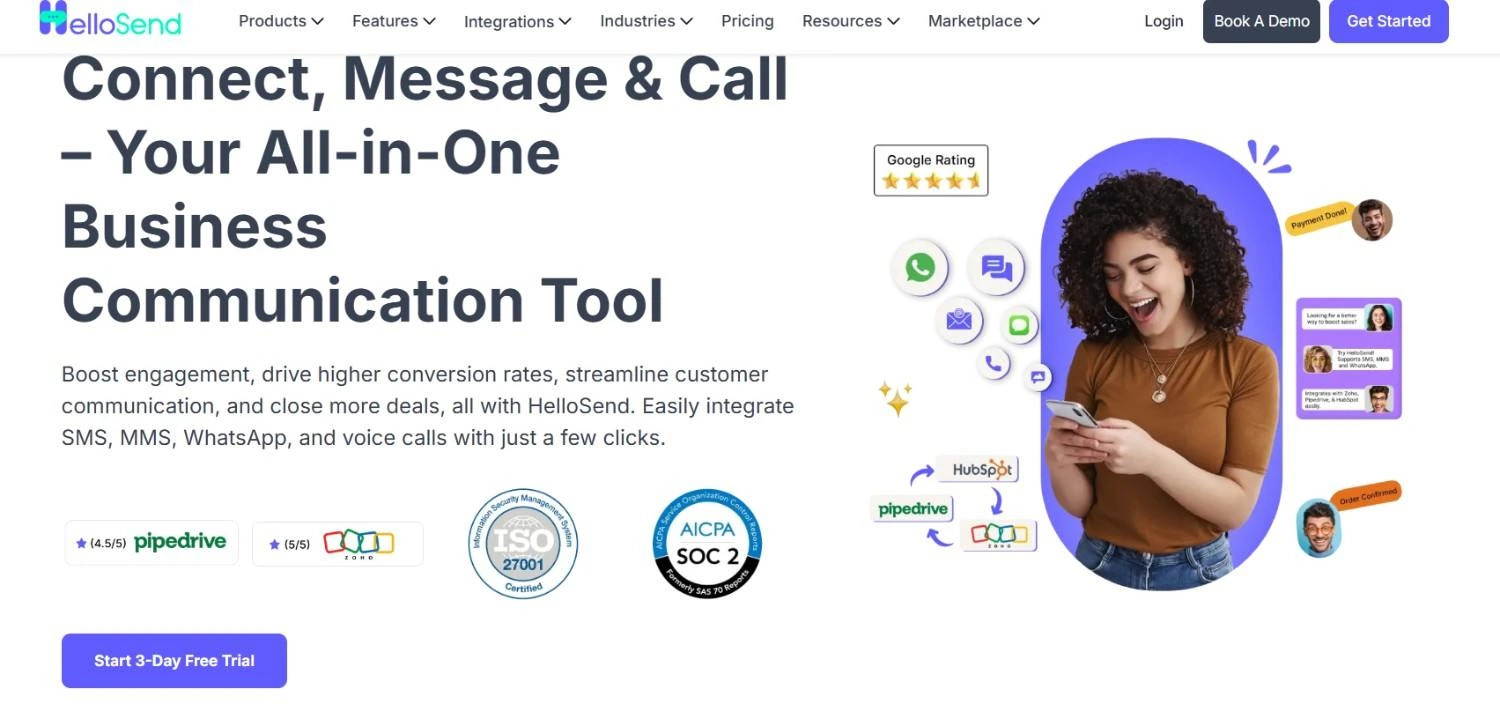
HelloSend is a must-have tool for ed-tech businesses. It provides the best solutions, such as personalized text messages, for communicating with students quickly via texts. Communicating with your students regularly will help you build a good relationship with them and help your Ed-Tech business expand effectively.
HelloSend is an all-in-one CRM-based messaging platform that supports SMS, MMS, and WhatsApp.
Let’s see the top features of HelloSend
1. SMS Marketing
- The SMS marketing feature lets you engage with your students quickly.
- You can connect directly with students via customized messages, timely updates, & exclusive offers.
- It is affordable for Ed-Tech businesses and delivers instant delivery with high open rates (98 %).
2. WhatsApp Marketing
- You can quickly expand your Ed-Tech business with WhatsApp. And connecting with many students on WhatsApp becomes so easy.
- With HelloSend, you will enjoy instant communication, multimedia support, personalized engagement, and more.
- This text messaging tool specializes in providing high-impact messages immediately to your students. To learn more about it, visit WhatsApp marketing solutions.
3. Voice Call
- Voice Call adds CRM-based calling to the same platform, so teams can make and track calls without leaving a CRM record.
- Reps click to call straight from a contact's profile, and each call logs and tracks itself with no manual entry.
- Call recording and history stay attached to that record, giving sales and support teams full context for every follow-up. This keeps voice as trackable as SMS and WhatsApp, so every conversation lives in one place.
Pricing:-
- Monthly Plan: $45 per user/month
- A 2-user plan at $60 per month, and
- The Standard 3-user plan at $75 per month ($60 per month billed annually).
- HelloSend's pricing plans are developed to offer flexibility and value.
- In both plans, features may vary.
- To understand more about the pricing plan, click on HelloSend pricing plans.
Integration:-
HelloSend is integrated with the following:-
- Zoho CRM
- Microsoft Teams
- SalesForce
- Wix
- Hubspot
- Pipedrive
Please visit Hellosend Integrations to get an overview of its integrations.
Final Words
Effective Ed-Tech industry marketing solutions don't have to be difficult to implement. With the appropriate tools and strategies in place, businesses may confidently navigate the competitive landscape.
By collaborating with platforms like HelloSend, you can be confident that you have the tools to improve communication, increase interaction, and create enduring relationships.
Adopting the newest technologies is only one part of a successful EdTech marketing strategy; another is building meaningful, audience-resonant engagement.
Fusing EdTech digital marketing strategies with educational marketing strategies can help businesses create a strong foundation for sustained success and impact.
Focusing on customer-focused tactics guarantees that your message reaches your intended population correctly, whether through multi-channel messaging or AI-driven personalization.
Connect with us for more insights and knowledge regarding how HelloSend helps in edtech marketing.
FAQ
1. What are the most effective EdTech marketing strategies?
The most effective strategies combine CRM-based SMS and WhatsApp messaging, content marketing, omnichannel campaigns, AI-driven personalization, and data-backed targeting. Together, they let EdTech brands reach students, parents, and educators with relevant, timely messages instead of generic campaigns.
2. How can EdTech companies use SMS marketing to engage students?
EdTech companies use SMS to send personalized updates, reminders, and time-sensitive offers straight to students' phones. Automating this through a CRM-based platform lets teams reach large groups without losing the one-to-one feel of the message.
3. What is EdTech marketing?
EdTech marketing is the promotion of education technology products and services to schools, teachers, students, and parents. It combines content marketing, CRM-based messaging, and data analysis to build awareness and drive adoption of digital learning tools.
4. How does WhatsApp marketing help EdTech businesses?
WhatsApp marketing lets EdTech businesses send instant, rich-media messages to large groups of students without losing a personal tone. It suits course updates, reminders, and interactive support since most students already have the app open every day.
5. How can AI improve EdTech marketing?
AI improves EdTech marketing by analyzing student behavior data and recommending relevant courses, content, or resources for each learner. This keeps messaging personalized at scale, whether a brand reaches a handful of students or tens of thousands.